









Watershed
Sumi Wu
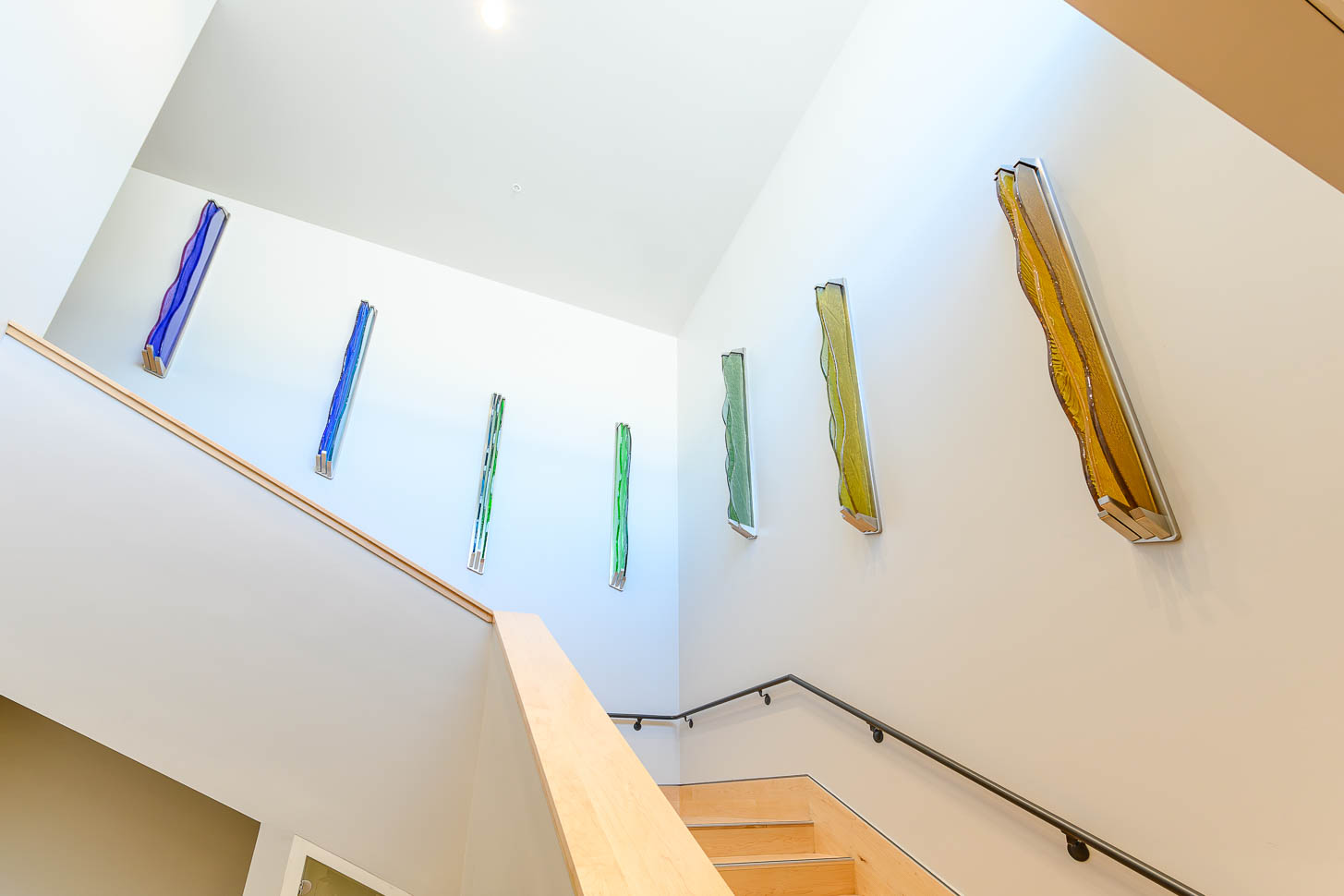
Installed in the main atrium stairwell of Central Point’s newly renovated police command center, Watershed is a permanent kiln-cast glass installation designed to engage viewers through repeated, everyday encounters. The facility houses police officers, 911 dispatchers, and forensic scientists—professionals whose work routinely places them in proximity to crisis, trauma, and high emotional demand. From its inception, the project sought to offer a quiet counterbalance: a work grounded in light, color, and the sustaining patterns of the natural world.
Wu’s concept emerged from both site conditions and personal history. Working remotely from architectural drawings and renderings, she identified a defining feature of the building: a large window at the base of the stairwell atrium that floods the space with natural daylight. For Wu—who has long been drawn to glass for its transparency, chromatic depth, and responsiveness to light—this condition became the project’s organizing principle.
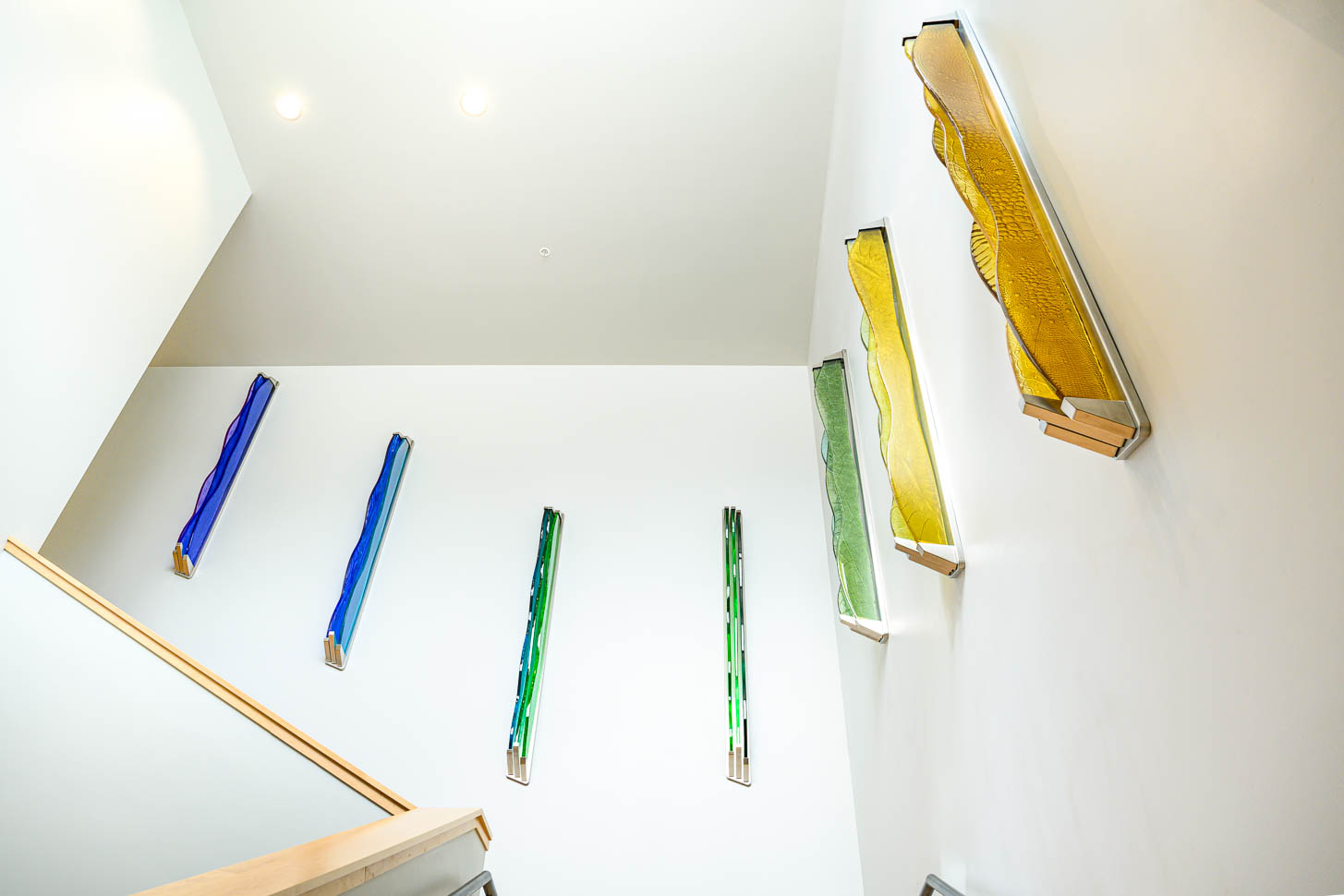
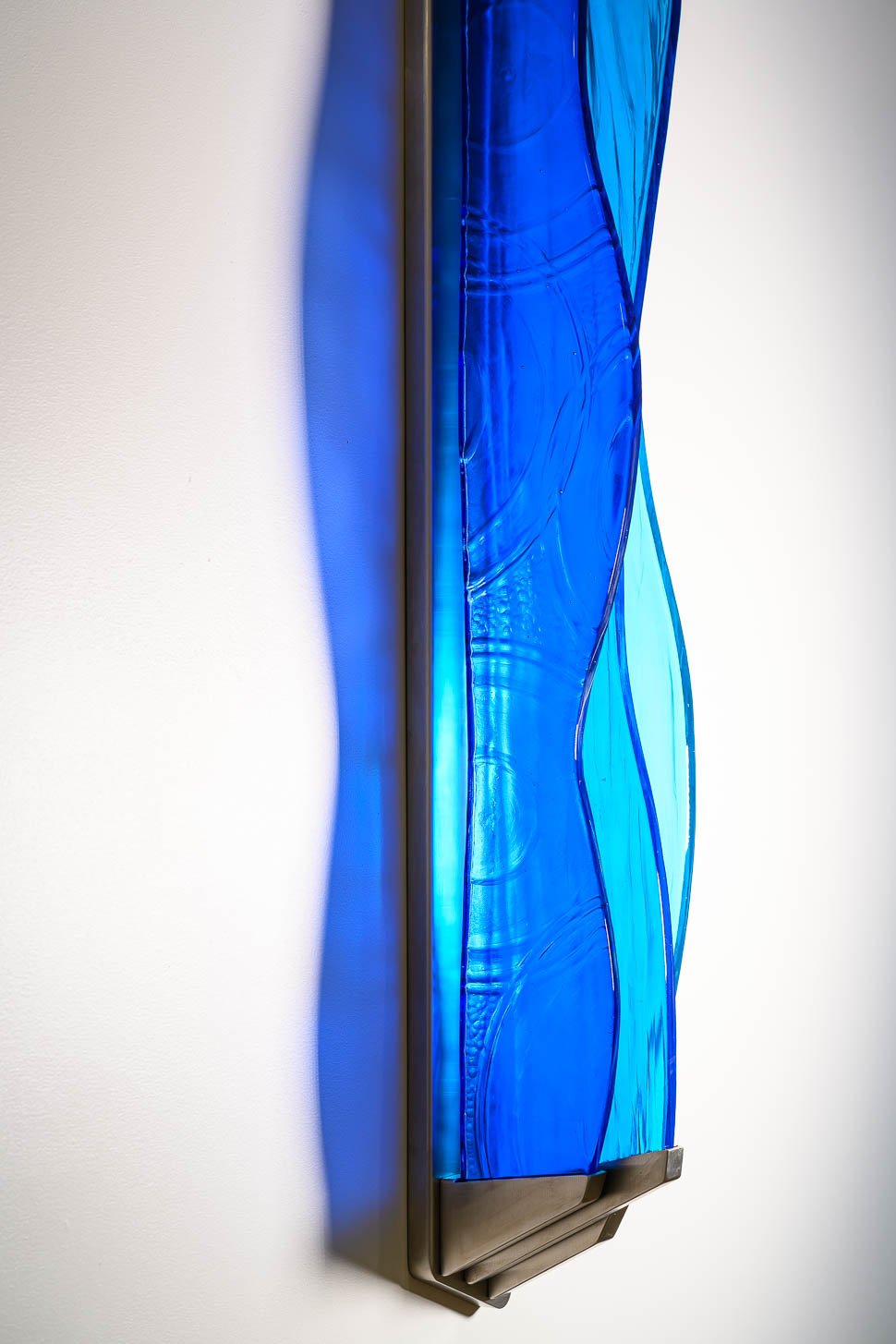
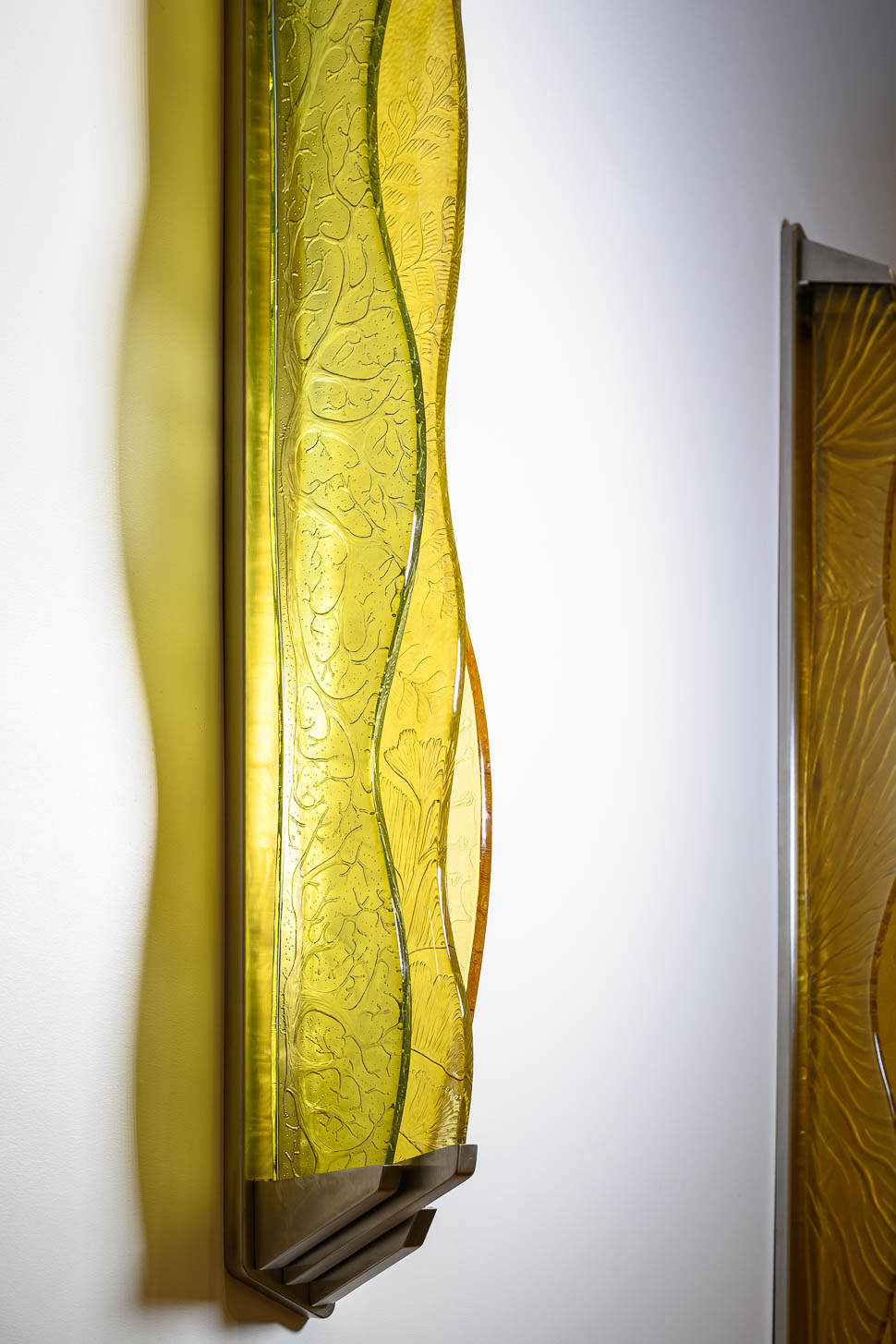
Titled Watershed, the installation draws on Wu’s background in physics and her longstanding interest in structures that repeat across scales in nature. In the Rogue River Valley, water connects soil, vegetation, landscape, and sky; Wu translated this idea of interconnectedness into seven vertical “waterfalls” of glass that rise with the stairway. The sequence moves chromatically and conceptually from the microscopic to the cosmic: earth tones and root systems at the base, followed by leaves and canopy, then water, landscape, and finally celestial forms rendered in blues and violets.
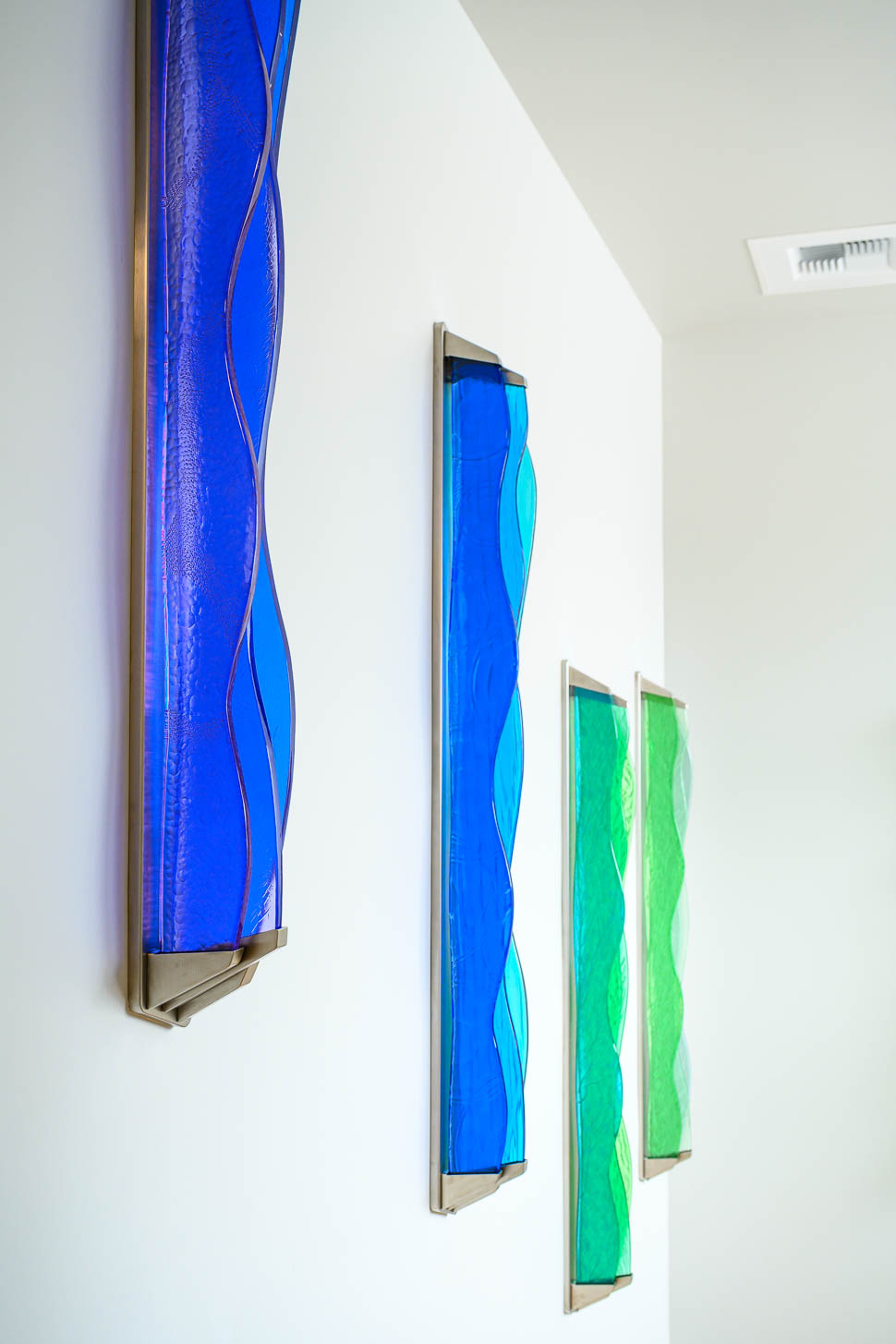
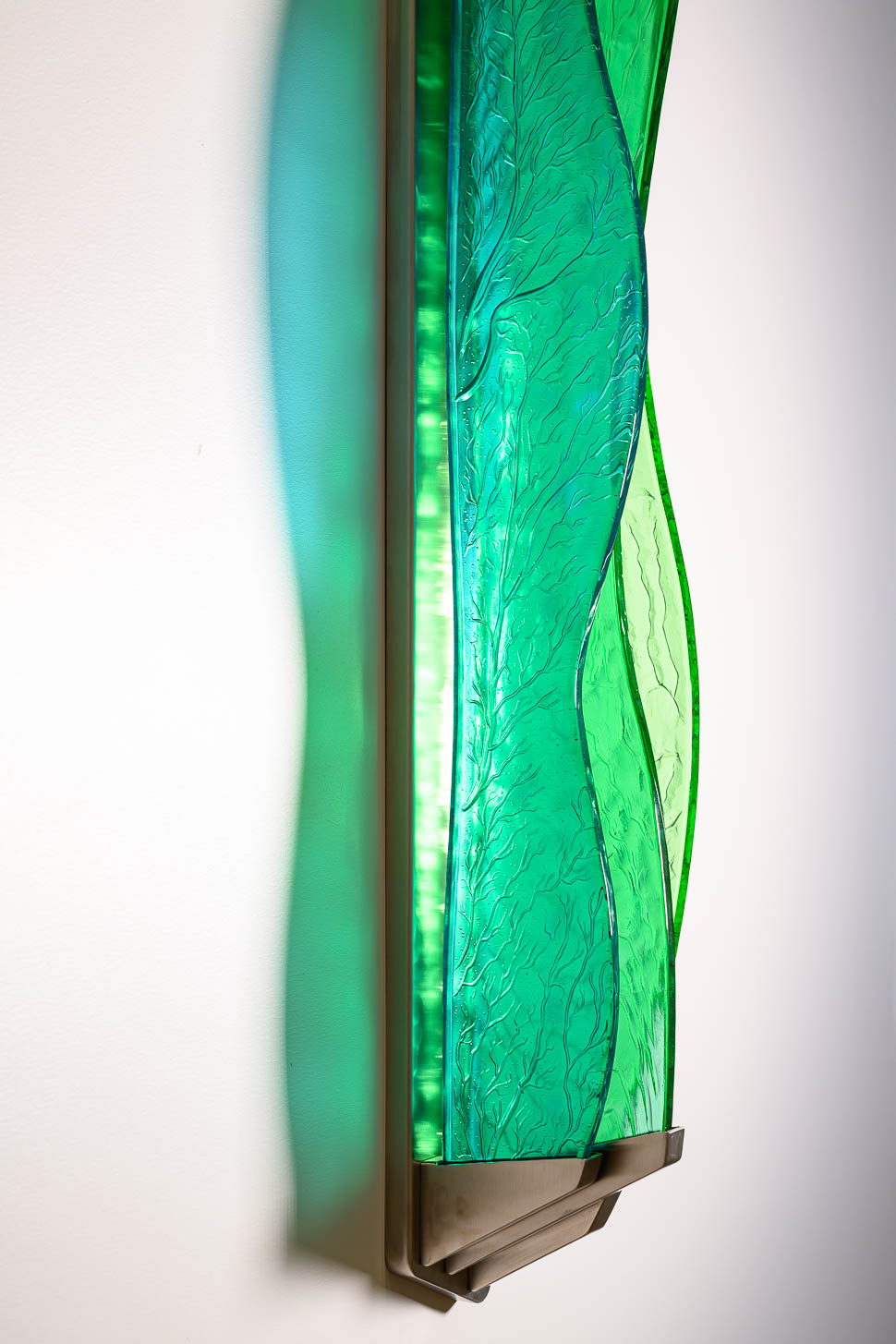
Each waterfall consists of stacked, transparent kiln-cast glass slabs, approximately ¾ inch thick, mounted slightly off the wall on a stainless-steel armature. The metal structure provides both physical support and a visual echo of the Oregon State Police core values—honor, integrity, loyalty, and dedication—while allowing light to pass through and activate the glass.
Wu initially considered fabricating the work independently but recognized that the project’s scale, optical complexity, and durability requirements exceeded the limits of her own facilities. Early consultations with Bullseye Studio, including test firings and material studies, proved decisive. The process gave Wu confidence that her carved clay imagery—root webs, leaf veins, spores, river deltas, and gravity fields—could be translated into glass with precision and clarity.
A visit to Bullseye’s Concept Library further reinforced her decision to work through casting rather than fusing or assembly. Shaping clay originals to be molded and cast allowed for a depth of texture and optical layering central to the project’s intent. Entrusting fabrication to Bullseye Studio ultimately freed Wu to focus fully on the imagery and sequencing of the work, while leveraging the Studio’s large-format kilns, glass casting expertise, and coldworking capabilities.
The final installation is designed to be experienced in motion. As viewers ascend and descend the stairway, they look through the depth of the glass rather than simply at a carved surface. Textures accumulate optically, shifting with angle, time of day, weather, and season. Color layers add and subtract, and sculpted imagery alternately sharpens or dissolves depending on light conditions and proximity.
This duality—readable at a glance yet richly detailed upon closer inspection—was central to Wu’s intent. Staff members pass the work multiple times a day, sometimes quickly, sometimes lingering. From a distance, the waterfalls read as calm vertical elements within the architectural volume; up close, they reveal intricate natural forms that reward sustained attention. Since installation, Watershed has elicited strong responses from building staff, many of whom have shared how the work offers moments of pause, reflection, and quiet reassurance within demanding workdays. For Wu, these responses confirm the project’s guiding premise: that encounters with light, color, and interconnected natural systems can foster compassion and resilience, even—or especially—in spaces dedicated to the handling of stressful situations.